Difference between a Marimba and a Xylophone
Please learn the difference...

Thank you for opening your HZ Music email!
After the millionth time of hearing people calling a marimba as a xylophone, I decided to dedicate this writing just to make this distinction.
The ignorance stops here.
History
Xylophone
So why is the xylophone much more well-known in our modern world? We would have to go back to the 19th and 20th century, where Western culture, and most notably the expansion of American culture in the post-WWII era influenced the world.
Classical Western music historically did not develop percussion instruments as much as the others, and most percussions, such as the timpani and the tambourine were imported from non-Western culture.
The xylophone was such that was adapted from Southeast Asian mallet percussion, when the wave of exoticism fascinated composers in the West to learn from “primitive” musical forms.
The Gamelan in Indonesia included an instrument of horizontally laid out wooden keys called the Gambang.
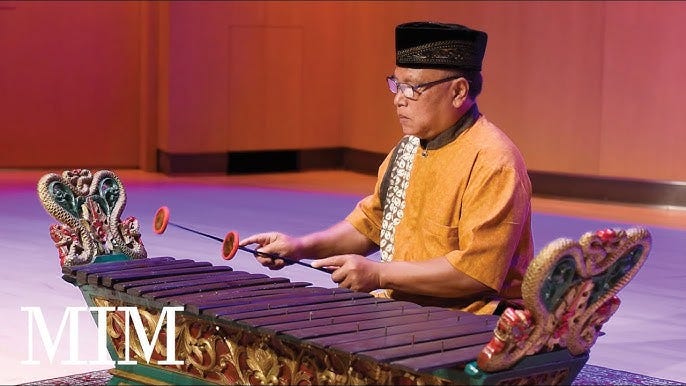
Similarily, Khmer (modern day Cambodia) had an instrument called the Angkor that was also a wooden mallet keyboard.

Also in West Africa, the Guineans also have long-used their version of the wooden struck idiophone that is called the Balafon.
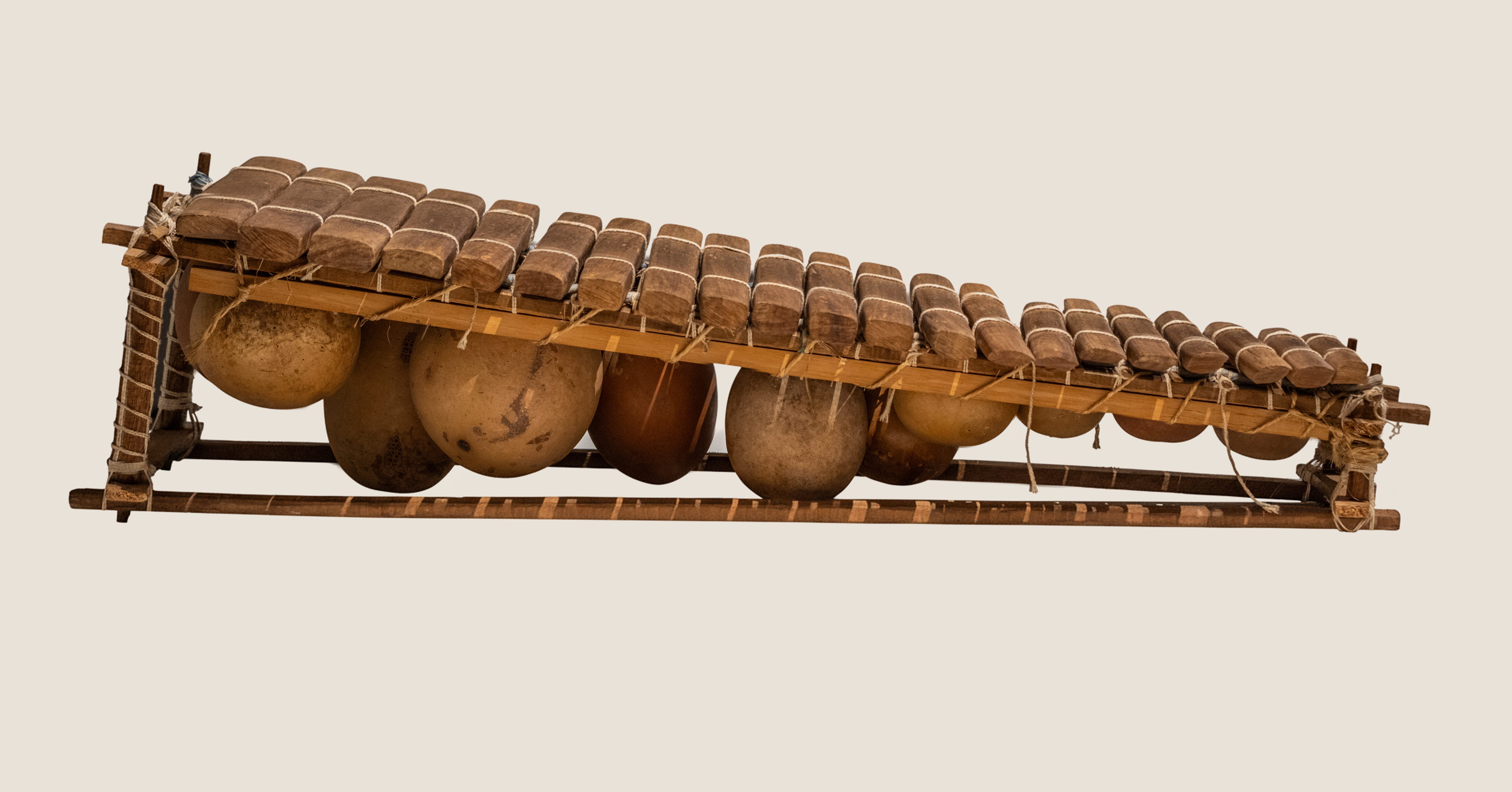
West African Balafon
The modern orchestral xylophone, however, was developed in 1886 by Albert Roth, who introduced a two-row, chromatic arrangement similar to a piano keyboard. While it was used in 19th century orchestra in Europe, it was the Americans that brought it to fame.
The xylophone became prominent in early American music around the early 1900s, gaining popularity through ragtime and vaudeville music, with George Hamilton Green being a key figure in popularizing it as a solo instrument through his recordings and performances.
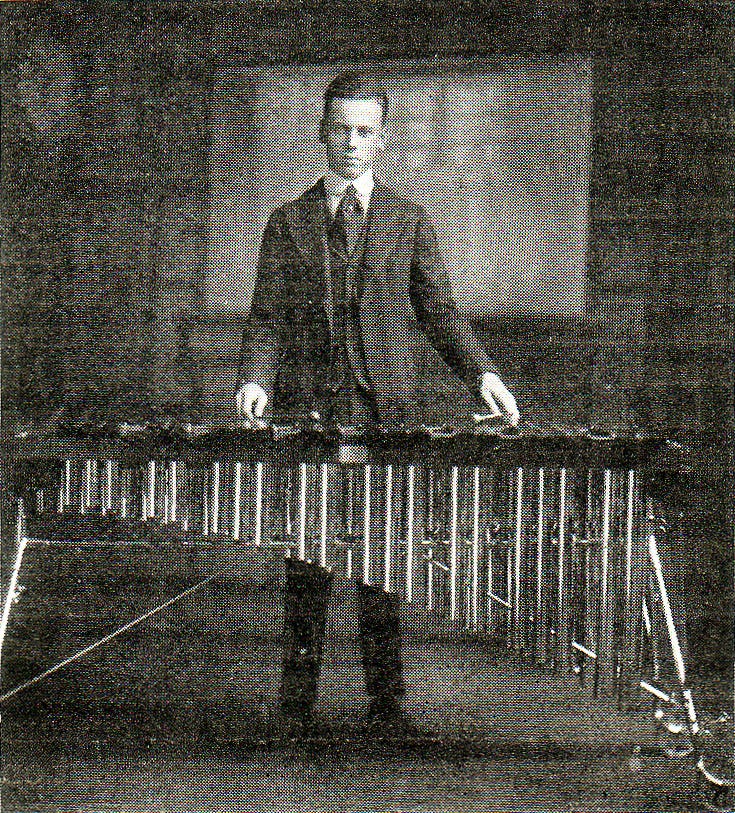
With the cultural machines of Disney and Hollywood spreading American entertainment to the world, the iconic sound of the xylophone, which was commonly used in early cartoons and comedies, globalized too.
The use of the xylophone is these silly cartoons also built a unspoken rule for composers: Xylophones has to be silly and funny! As a result, there are virtually no xylophone repertoires that are sad, even today.
Marimba
The marimba, on the other hand, has a more distinctive and solidified historical identity. While early inspirations of the marimba may be traced back to the same wooden idiophones developed by indigenous African communities thousands of years ago, the marimba has a more distinct identity in Latin America as an instrument that was adapted by the enslaved population.
In countries like Mexico and Guatemala, the instrument was further developed by replacing gourds with more precisely tuned wooden resonator chambers. The modern chromatic marimba, with its two-row keyboard layout, was invented in Guatemala by Sebastian Hurtado in the late 19th century.
Due to its ties with identity in Latin America, the marimba is heavily associated with cultural and national notions. For example, it is still proudly the national instrument of Guatemala!
What makes the history of marimba interesting is that the now standardized 5-octave concert marimba was neither developed by the Americans, the Europeans, nor the Latin Americans.
In post-war Japan, a xylophone/marimba virtuoso Keiko Abe brought the instrument to fame in the East. Driven by creative curiosity and commercial demand, Abe worked with the engineers from the Yamaha Corporation to expand the range of the marimba by adding the lower register.
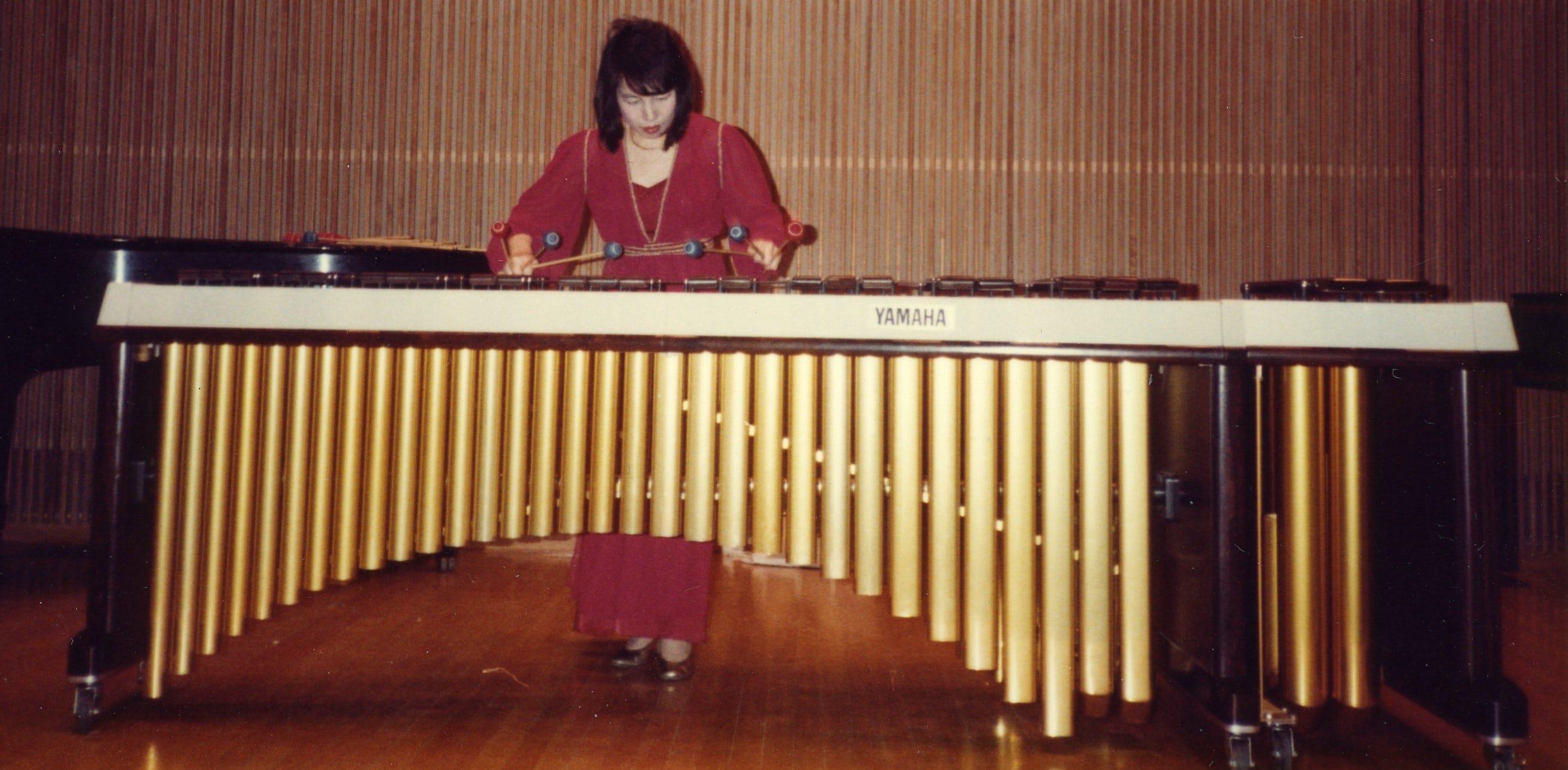
This created the foundation of the modern marimba as a solo instrument that has a flexible range and a mellower tone, further differentiating it from the xylophone by size and sound quality.
Physical Differences
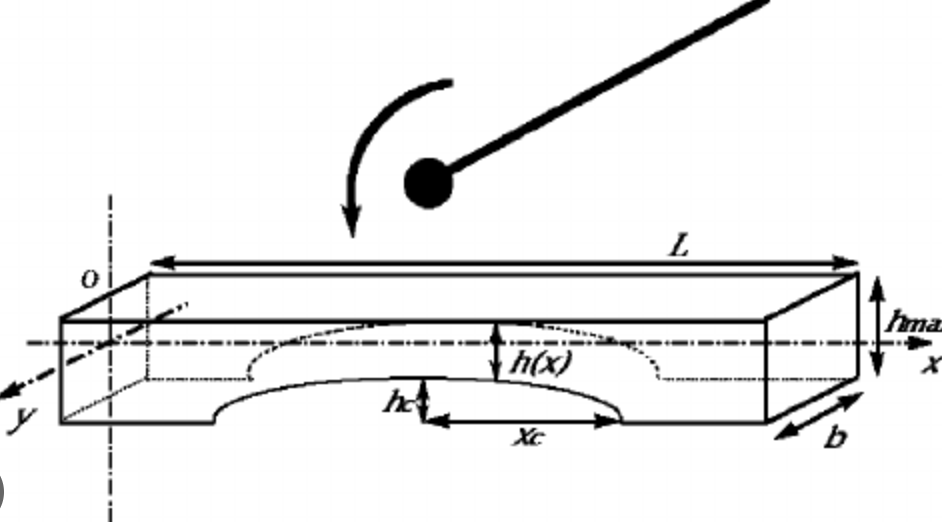
So the major difference between marimba and xylophone is the way that the bars are shaped. (No, they are not all wooden rectangles!)
Marimba bars are larger, hollowed out in the center, and tuned to have a higher overtone (octave), creating a warm, full sound.
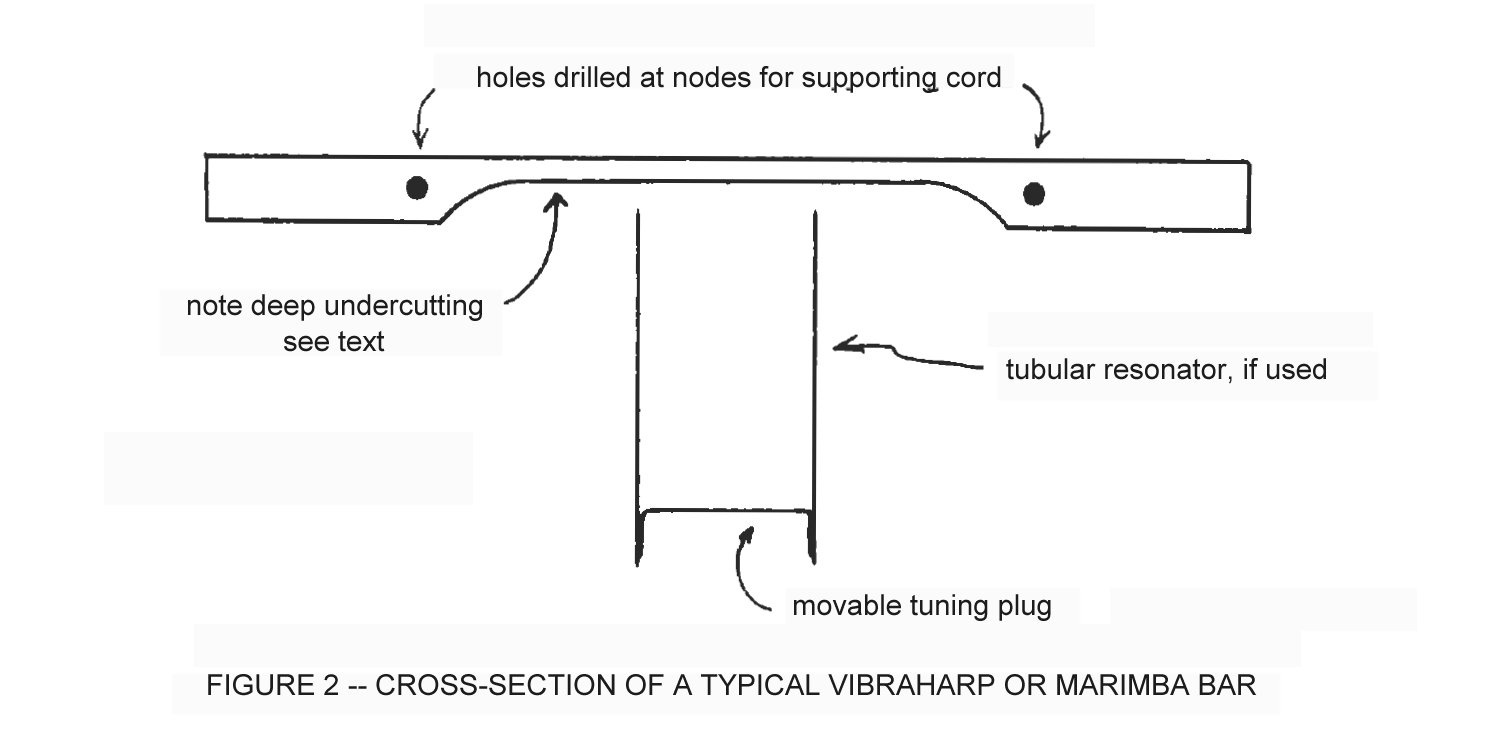
Xylophone bars are thicker, sometimes with wavy edges or multiple curves, and are tuned with a higher overtone (a fifth), resulting in a brighter, more piercing sound.
.
Usually the good marimbas need to be made of rosewood that is at least 200 years old; Older wood are harder and have less moisture so it lasts longer and doesn’t break. The best rosewood for marimba is Brazilian Amazon rosewood, but those are banned now so we can only use Guatemalan rosewood which are usually younger and easier to break.
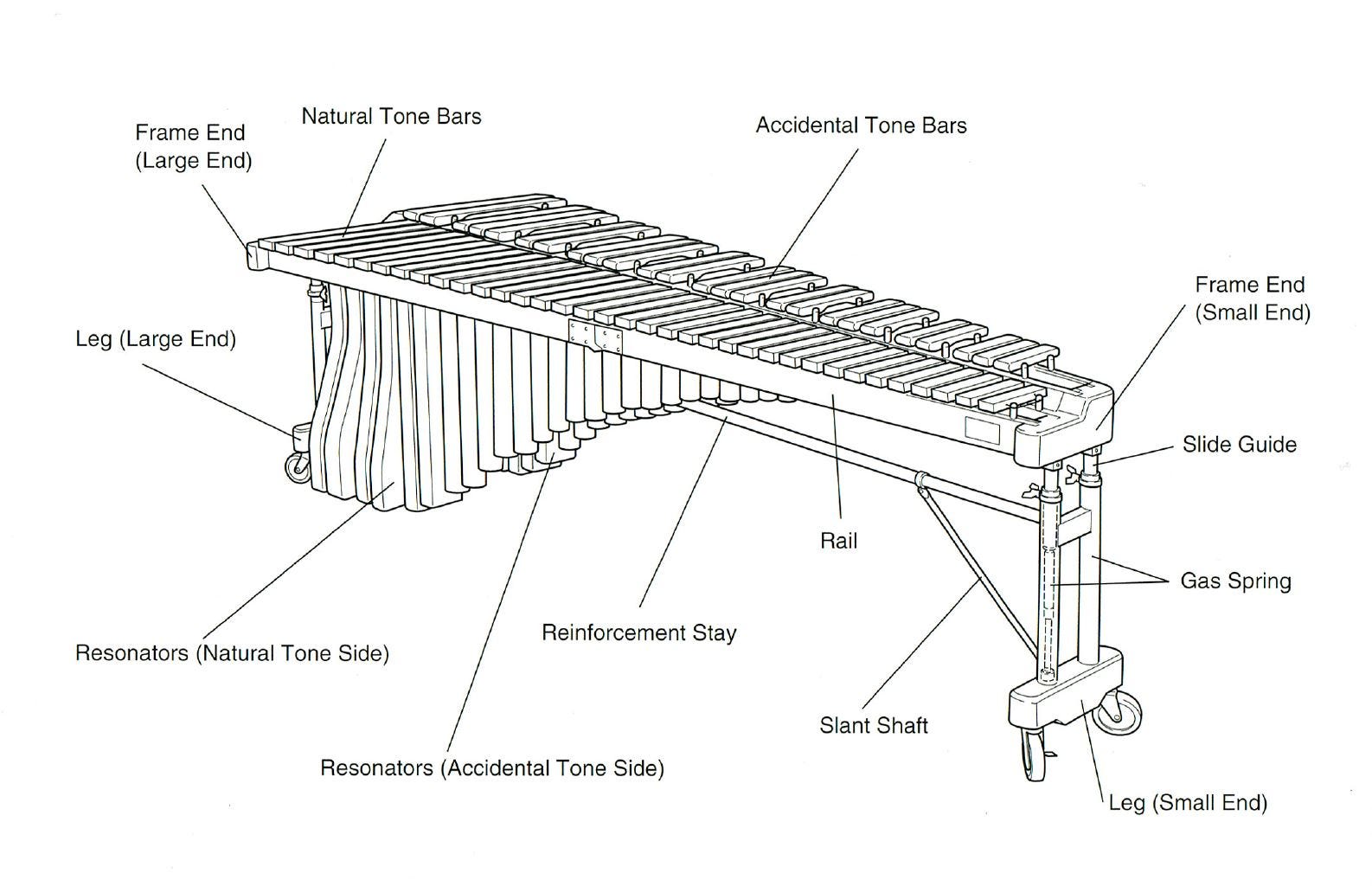
The marimba also have much bigger resonators than the xylophone, making it more resonant.
Sound Qualities
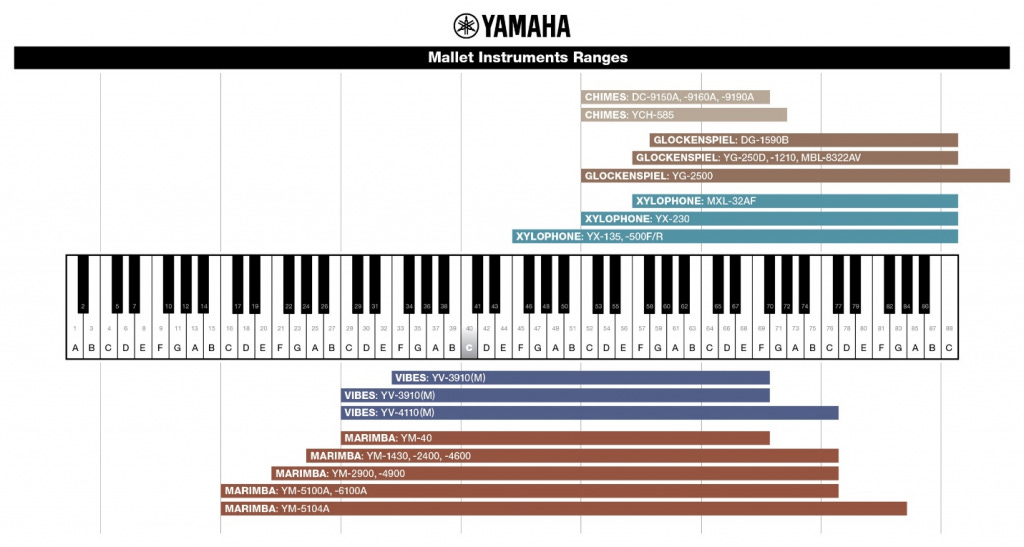
In terms of range, the xylophone has a much higher range than the marimba, making it sound brighter. Many may argue that this is the reason by it is impossible to make the xylophone sound “sad”! The modern marimba, on the other hand, can go as low as C2, making it capable to perform many arrangements of piano repertoires, too!
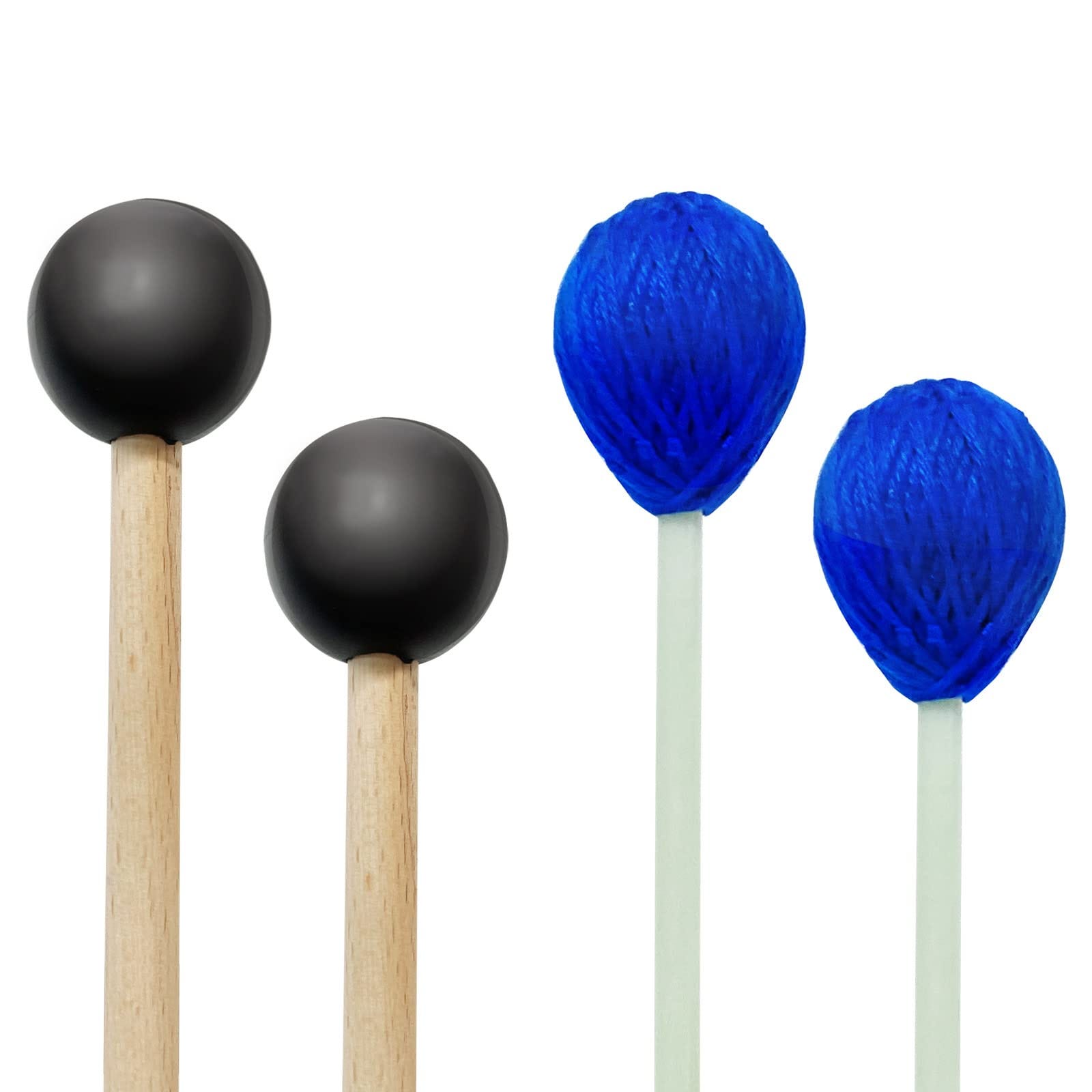
In terms of resonance, as described above, the marimba bars resonate more because of the different ways that the bars are carved on the bottom. It is also common for the xylophone to be played with rubber mallets, which create a harder and more percussive sound. The marimba is often played with yarn mallets, thus producing a softer but more resonant sound. While sometimes the marimba can also be played with rubber mallets, due to the thinness of the bars, it can damage the instrument (especially when a full-sized marimba is usually more than 20,000 USD!).
For many manufactures, the way that bars are tuned are also different!
The marimba is tuned on even-numbered harmonics, with tuning on the fundamental pitch, the fourth harmonic, and the 10th harmonic. The xylophone, however, is tuned on the fundamental pitch and the odd-numbered third harmonic. Tuning the same C tone plate, on the marimba, the bar is matched to C, high C, and high E; on the xylophone, the bar is matched to C and high G.
Yamaha’s xylophones are tuned with odd-numbered harmonics, but some manufacturers make instruments tuned with even-numbered harmonics.
Source: Yamaha
Applications
With the differences stated above, it is now fairly obvious to realize why the xylophone and the marimba are used very differently.
The xylophone are used more in the orchestra or as a solo instrument in jazz, because it produces a bright and recognizable sound. But because of its lack of resonance, it is rarely played as a solo instruments.
The marimba, on the other hand, have developed into a solo instrument due to its big range and ability to hold notes relatively longer. Thus, even Bach can be played on the marimba!
谢谢苞米!
Thanks for teaching me about these instruments!